
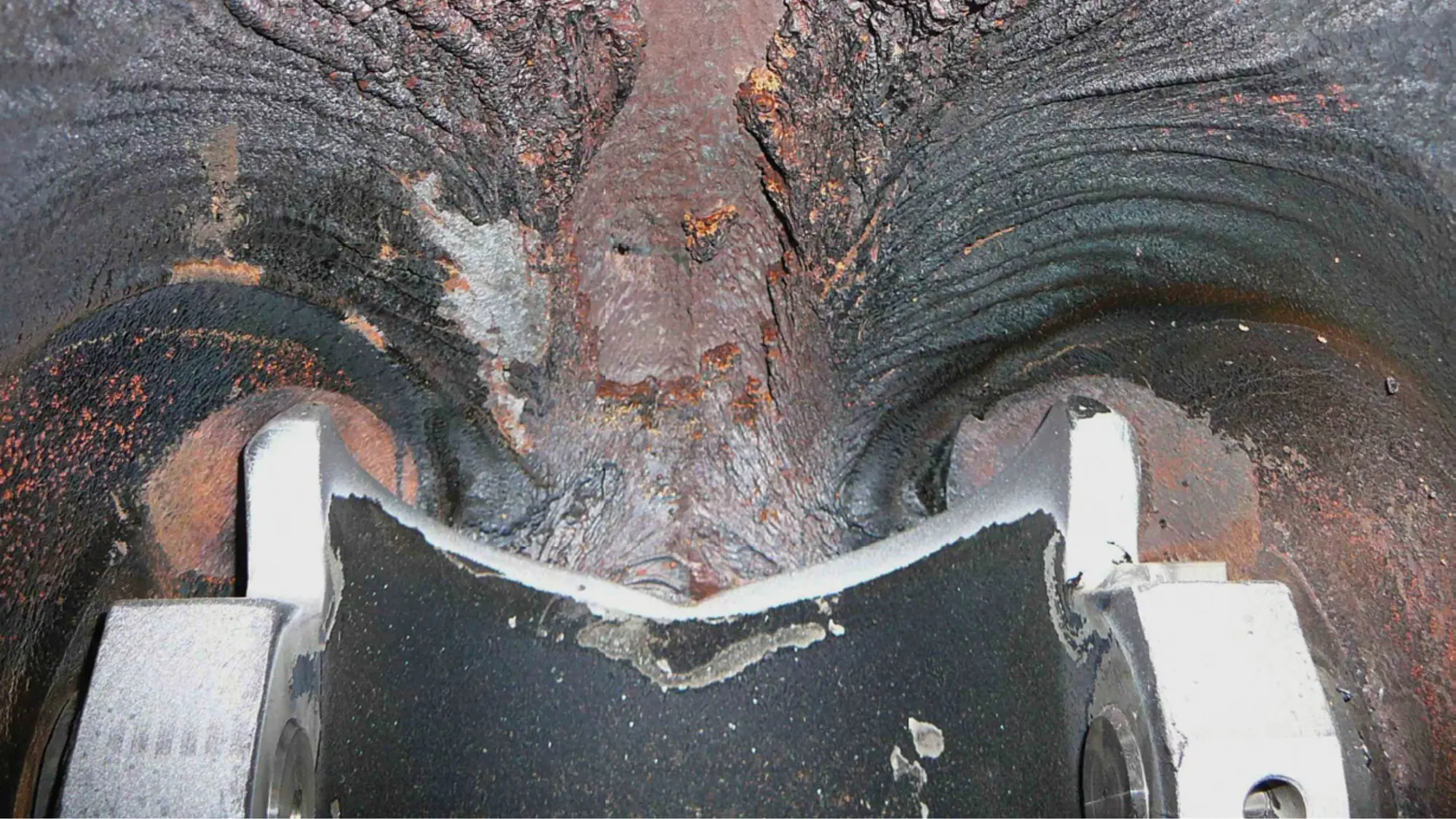
Slurries, catalyst, sand, coke fines and other suspended solids are brutal on control valves. Trim that performs for years on clean service can be destroyed in weeks in abrasive duty. Selecting, specifying and maintaining valves for these services is its own discipline — and treating an abrasive valve like a clean-service one is a fast route to chronic failures.
How solids attack a valve
Suspended solids erode trim and bodies through sheer mechanical impact. Wherever the fluid changes direction or accelerates — across the seat, around the plug, through the cage windows — entrained particles scour metal away. Erosion rises steeply with velocity, so the same particle load that is tolerable at low speed becomes destructive where the flow is fastest.
The consequences compound: seats lose tight shut-off, the trim loses its designed flow characteristic, leakage climbs, and the control loop becomes erratic. Left alone, the damage migrates from replaceable trim into the valve body itself.
Selection that survives
Abrasive service rewards simple, robust geometry over complexity. Hardened or ceramic trim, erosion-resistant body and seat materials, and designs that keep velocity down and steer the abrasive stream away from sealing surfaces all extend life. Angle bodies and flow-to-open or flow-to-close orientations are chosen deliberately to protect the seat.
Over-engineered, multi-stage trim that excels in clean severe service can actually fail faster in slurry, where fine passages plug and thin edges erode. The right answer is frequently a rugged, purpose-built design matched to the particle load — not the most sophisticated trim available.
The maintenance reality
In abrasive service, trim is a consumable, not a fixture. The economics of the circuit hinge less on making trim last forever and more on how quickly a worn valve can be returned to service — which depends entirely on having the correct genuine wear parts on the shelf.
Plants that run abrasive circuits well plan for it: they predict trim life from experience, schedule replacement before shut-off is lost, and keep the matching genuine spares stocked as routine consumables rather than scrambling for them as emergencies.
Materials and the rebuild
Material selection is where abrasive valves are won or lost — hardfacing, solid hardened components and ceramic inserts each suit different combinations of particle hardness, temperature and corrosion. A rebuild that substitutes a softer or off-spec component for a hardened original simply reintroduces the failure the design was meant to prevent.
Keeping abrasive-service valves on genuine, correctly-specified hardened parts is what makes the replacement interval predictable. ACD supplies genuine Fisher™ trim so abrasive circuits get back on line fast and stay on their expected wear cycle.
Need the genuine part for this?
Send us the serial number, model or spec — genuine Fisher™ parts, fast quotes, shipped from our Orlando, FL warehouse.