
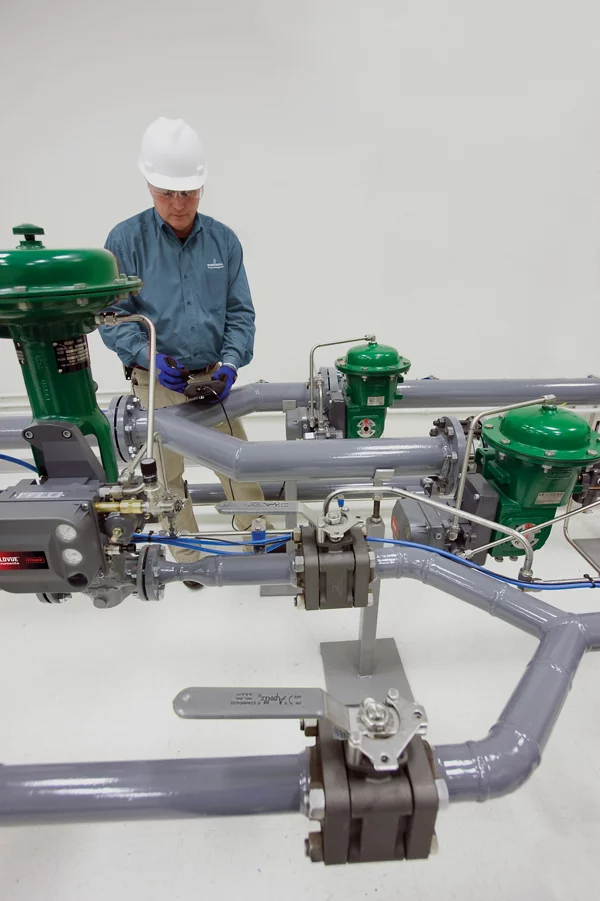

» Fisher™ · Control Valves
Segmented Ball Valves
V-notch rotary ball valves for wide rangeability and high-capacity throttling — the rugged choice for erosive, viscous and fibrous service with tight shutoff.
- Rotary · V-notch segmented ball
- Equal-percentage characteristic
- Wide rangeability (~100:1)
- Flangeless (wafer) or flanged
What it is
Segmented Ball Valves
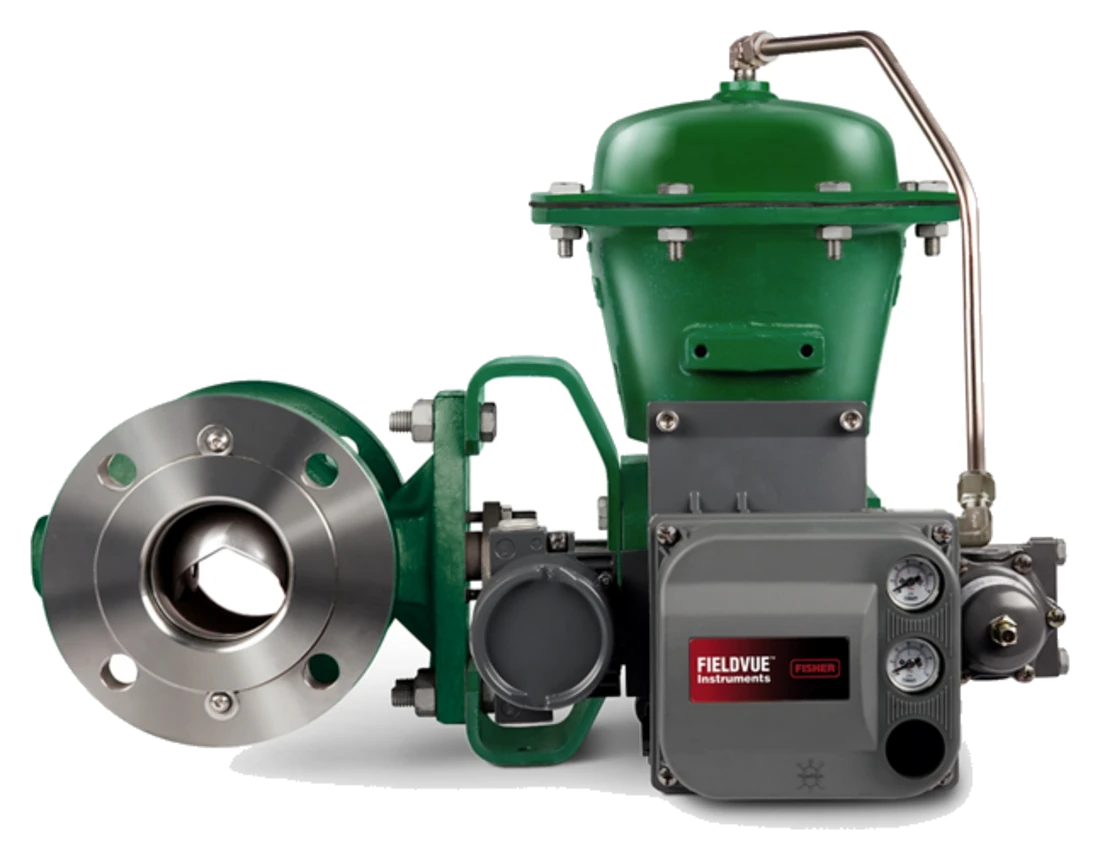
A segmented ball valve is a rotary control valve whose closure member is a partial sphere with a contoured V-shaped notch. As the ball rotates against the seal ring, the V-notch opens progressively, giving precise throttling across a very wide flow range — and far more capacity per dollar than a comparable sliding-stem valve in larger line sizes.
The V-notch is what defines it. It produces an equal-percentage flow characteristic and wide rangeability, while the polished, rotating ball shears through the seal — a self-cleaning action that makes the design a traditional answer for erosive, viscous and fibrous fluids that would clog or wear other valve styles.
Because the flow path is essentially straight-through, segmented ball valves pass high capacity at modest pressure drop, with good control and shutoff. They are widely used in the paper industry, chemical plants, sewage treatment, power and petroleum refining, and are available in flangeless (wafer) or flanged bodies.
How it works
Construction & trim
The segmented ball rotates roughly 90° from closed to open. Through that travel the V-notch presents an increasing flow area against the seal ring, shaping the equal-percentage characteristic and giving the valve its wide turndown. A shearing action between the ball edge and the seal keeps fibrous and slurry media from building up.
Seal choice sets the shutoff class — soft seals reach tight Class VI shutoff, while metal seals trade some tightness for temperature and abrasion resistance. Trim and seal materials are matched to the fluid, with Fisher™ slurry Vee-Ball constructions built to run smoothly and non-clogging on the most abrasive pulp-stock and slurry service.
Standard Vee-Ball
V-notch segmented ball for general throttling — wide rangeability and an equal-percentage characteristic, with soft or metal seals to set the shutoff class.
Slurry / fibrous service
Shearing V-notch ball built for fibrous slurries, liquids, gas and steam — smooth, non-clogging action for pulp stock and abrasive media.
Flangeless (wafer) or flanged
Compact flangeless bodies for space and weight savings, or flanged bodies for higher ratings and easier maintenance.
Soft or metal seals
Soft seals for tight Class VI shutoff; metal seals for higher temperature and abrasion resistance where some leakage is acceptable.
Common applications
Where segmented ball valves fit
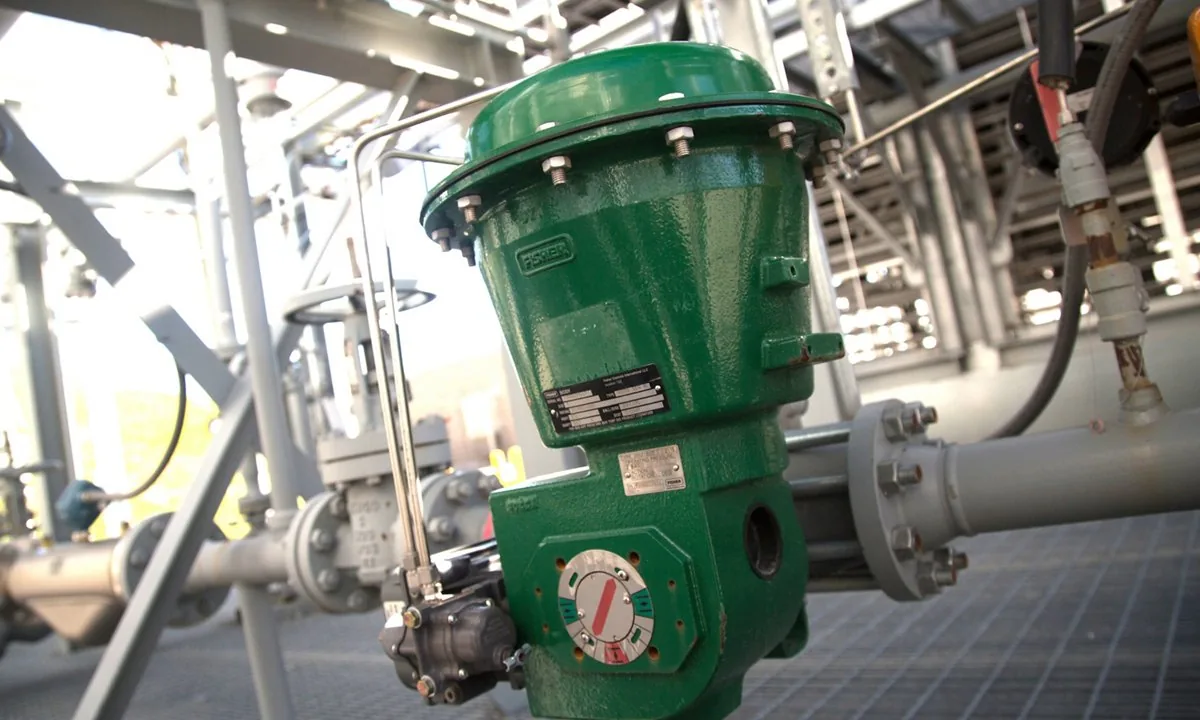
- Pulp & paper stock, including fibrous slurries that clog or wear other valve styles
- Erosive and viscous liquids in chemical plants and petroleum refineries
- High-capacity throttling in large lines, where rotary capacity-per-dollar beats sliding-stem
- Sewage and effluent treatment service
- Power-industry duties needing wide rangeability with reliable shutoff
Why it's chosen
- Wide rangeability (~100:1) and an equal-percentage characteristic from the V-notch
- High capacity per investment dollar — especially in larger line sizes
- Shearing, self-cleaning ball handles fibrous, viscous and erosive media
- Tight shutoff (to Class VI with soft seals) in a compact rotary package
Worth weighing
- Higher pressure recovery than globe valves — check cavitation potential on high-pressure-drop liquid service
- Seal selection trades shutoff tightness against temperature and abrasion resistance
Genuine OEM
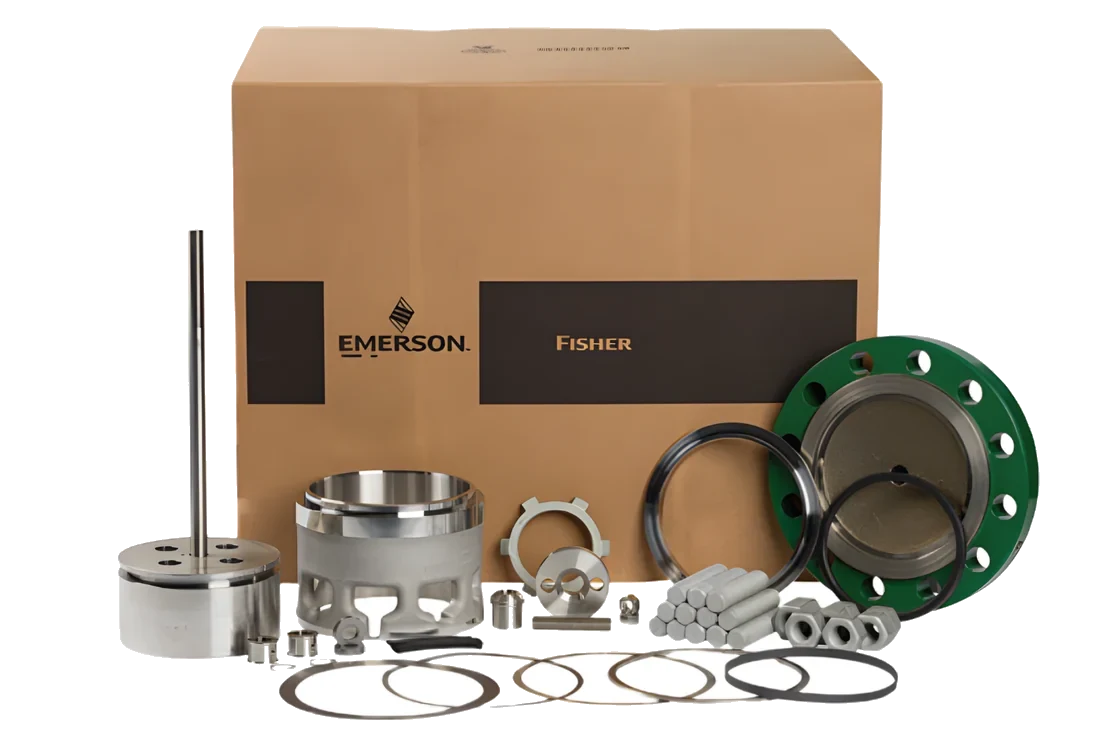
Genuine spare parts for segmented ball valves
V-notch balls, seal rings, seats, shafts, bearings, packing and seal kits — the genuine OEM rotary internals that keep a segmented ball valve shearing cleanly, characterized and sealing to its rated class.
A will-fit look-alike can quietly undermine control, shutoff and emissions compliance — genuine OEM parts protect the design the valve was built to.
Resources & tools
Size it, look it up, learn the engineering
The guides and free tools behind every segmented ball valves decision — from sizing to finding the replacement for a discontinued unit.
Sizing guide
How to Size a Control Valve
A practical, step-by-step walkthrough of valve sizing and selection — service conditions, Cv, pressure drop, characteristic and severe-service checks. Grounded in the Fisher™ Control Valve Handbook.
Read the guide →Download
Fisher™ Rotary Valve Selection Guide (PDF)
Fisher™ selection guide — body styles, sizes, materials and trim to match the valve to your service.
Download PDF →Download
Fisher™ Pulp & Paper Solutions (PDF)
Fisher™ selection guide — body styles, sizes, materials and trim to match the valve to your service.
Download PDF →Free tool
Valve Flow & Cv/Kv Calculator
Estimate flow, pressure drop or the required flow coefficient for liquids, gas and steam. Open the calculator and unlock it on its page.
Open the calculator →Technical library
Handbooks & application guides
The Fisher™ Control Valve Handbook and our application guides — the reference material behind every sizing and selection decision.
Browse the library →Control Insights
Engineering articles
Cavitation, flashing, characterization, digital valve diagnostics and more — practical control-valve engineering from our team.
Read Control Insights →Send us a serial number, model or service and our team will identify and quote the right Fisher™ segmented ball valve or parts.
Need segmented ball valves or parts?
Send us the serial number or model — genuine OEM, shipped from our Orlando, FL warehouse.